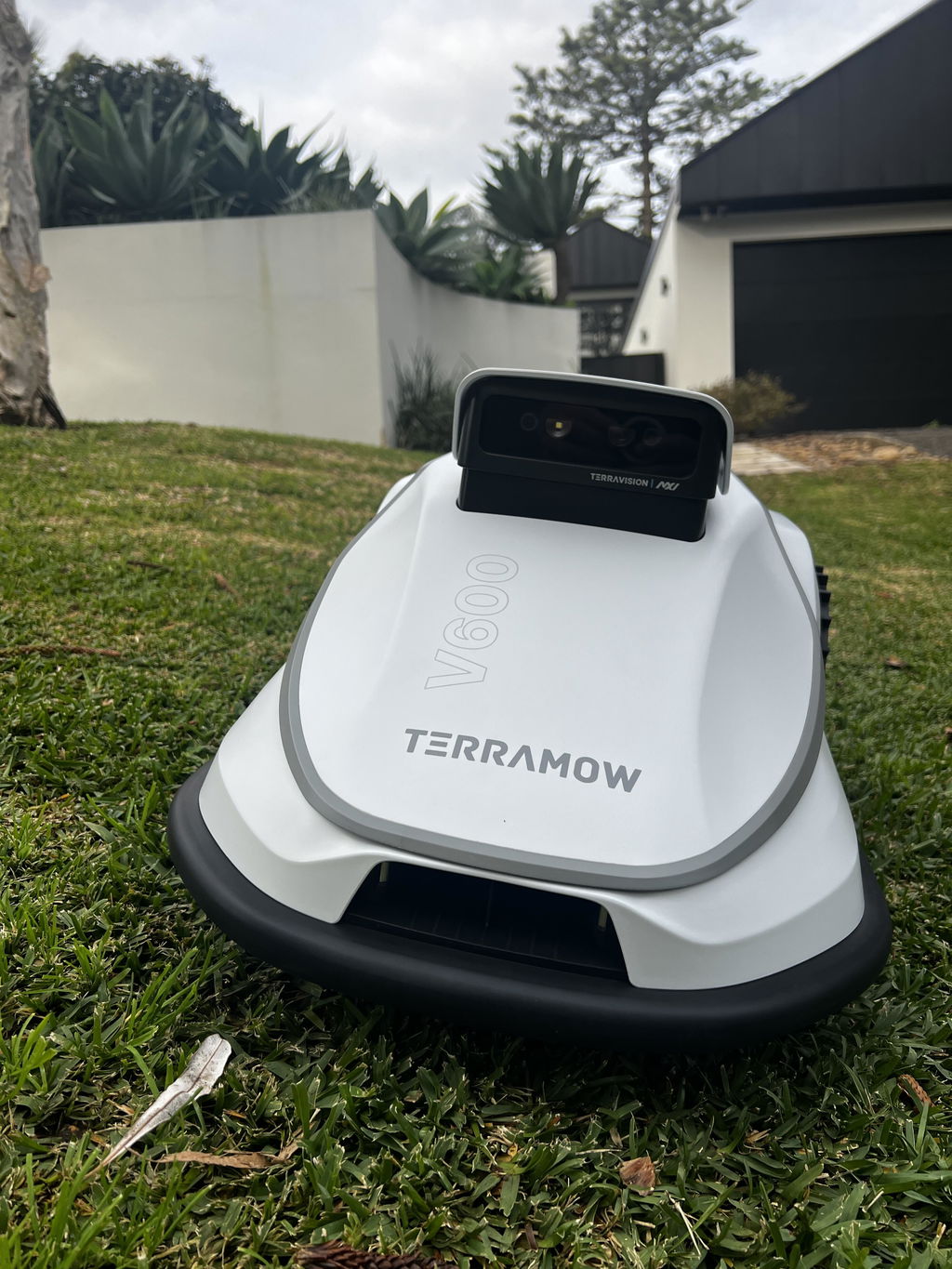
A Must-Read for Pet-Owning Families in Australia: Safe and Pet-Friendly Lawnmowers

If you share your backyard with a dog, a cat, or both, you've probably had that moment — watching them sunbake on the grass and wondering whether your lawnmower is actually safe around them. It's not an unreasonable worry. Traditional mowers, whether petrol or electric, come with fast-spinning blades, loud engines, and exhaust fumes. None of that is great for a curious golden retriever or a cat that treats the entire yard as its personal kingdom.
Australia has one of the highest pet ownership rates in the world, and roughly 69% of households have at least one pet, according to Animal Medicines Australia. That's a lot of families trying to balance a neat lawn with keeping their animals safe. And it's exactly why the conversation around pet-friendly lawnmowers has become so important.
The latest AI vision robotic mowers have quietly solved this problem. They're safe enough to run around your pets, quiet enough not to spook them, and smart enough to steer clear on their own.
Why Lawnmower Safety Matters for Pet Owners
Lawn mower safety for pets is something most owners don't think about until something goes wrong. And when it does go wrong, it tends to go wrong fast.
The Risks You Might Not Have Thought About
Petrol mowers are the most common type in Australian sheds, and they come with a stack of hazards for animals that most people don't think twice about:
-
Blade contact. It sounds obvious, but the combination of a low-slung pet and a spinning metal blade is genuinely dangerous. Dogs especially love to chase moving objects, and a running mower is no exception. Vet clinics across Australia report treating pets for lacerations and injuries caused by mower blades every mowing season.
-
Noise trauma. A typical petrol mower kicks out 95–105 decibels. To put that in perspective, a dog's hearing is roughly four times more sensitive than a human's. What's merely loud to you is genuinely painful to them. Prolonged exposure to that level of noise can cause stress, anxiety, and even long-term hearing damage in pets. Something RSPCA Australia has flagged as an under-discussed welfare issue.
-
Exhaust and chemical exposure. Petrol mowers produce carbon monoxide, hydrocarbons, and particulate matter. Your dog, lying on the grass at ground level, is breathing all of that in directly. A Swedish study also found that one hour of petrol mower use produces as much air pollution as driving a car 160 km, which is not great for anyone, but especially not for a pet with its nose several centimetres from the ground.
-
Debris and projectiles. Rotary mowers can fling stones, sticks, and clippings at high speed. A dog or cat in the firing line can end up with eye injuries or worse.
-
Fuel and oil storage. According to research cited by the Australian Government's Department of Climate Change, Energy, the Environment and Water, Australians spill an estimated 18 million litres of fuel annually while refilling garden equipment. For a pet that likes to investigate or lick at puddles, that's a poisoning risk.
What Vets Say
The Australian Veterinary Association recommends keeping pets indoors or in a separate enclosed area whenever petrol mowers are in use. It's sound advice, but it's also a hassle, especially if you're mowing weekly. And it doesn't solve the problem of fuel storage, chemical residue on the lawn, or the fact that many pets get anxious just hearing the mower start up from inside the house.
What Makes a Lawn Mower Pet-Friendly?
If you're looking for safe lawnmowers for pets in Australia, here are the key factors that actually matter:
-
Blade Design and Speed: traditional rotary mowers spin a single blade at 3,000+ RPM. That's enough to cause serious injury in a split second. Robotic mowers, on the other hand, use lightweight pivoting blades that spin at lower speeds and retract on impact. The risk of a serious laceration is dramatically lower. If a blade hits a solid object, it stops rather than powering through.
-
Noise Level: this is where robotic mowers really pull ahead. Most models operate at 50–70dB, roughly the volume of a normal conversation. That's well below the threshold that causes stress or hearing damage in animals. Your dog might look up, realise it's not interesting, and go back to sleep.
-
Obstacle Detection: this is the big one. Older robotic mowers use bump sensors. They physically hit something, then change direction. Not ideal if the "something" is your puppy. Newer AI vision mowers use cameras and real-time object recognition to detect and steer around pets, toys, and other obstacles before making contact. It's the difference between dodging something and running into it first.
-
No Petrol, No Fumes, No Spills: a battery-powered robotic mower eliminates the fuel issue entirely. No petrol to store, no oil to change, no exhaust fumes for your pet to breathe in, and no chemical residue left on the grass they walk and lie on.
-
Scheduling Control: being able to schedule mowing sessions means you can run the mower at night, early morning, or whenever suits your routine. Your lawn stays trimmed, and your dog never has to share the yard with a machine.
How AI Vision Mowers Keep Your Pets Safe
If you've ever watched a traditional robotic mower bounce aimlessly around a yard, retracing the same patches over and over, you'll understand why the next generation needed a rethink. Here's what AI vision brings to the table, and why it matters for your pets.

Real-Time Pet Detection
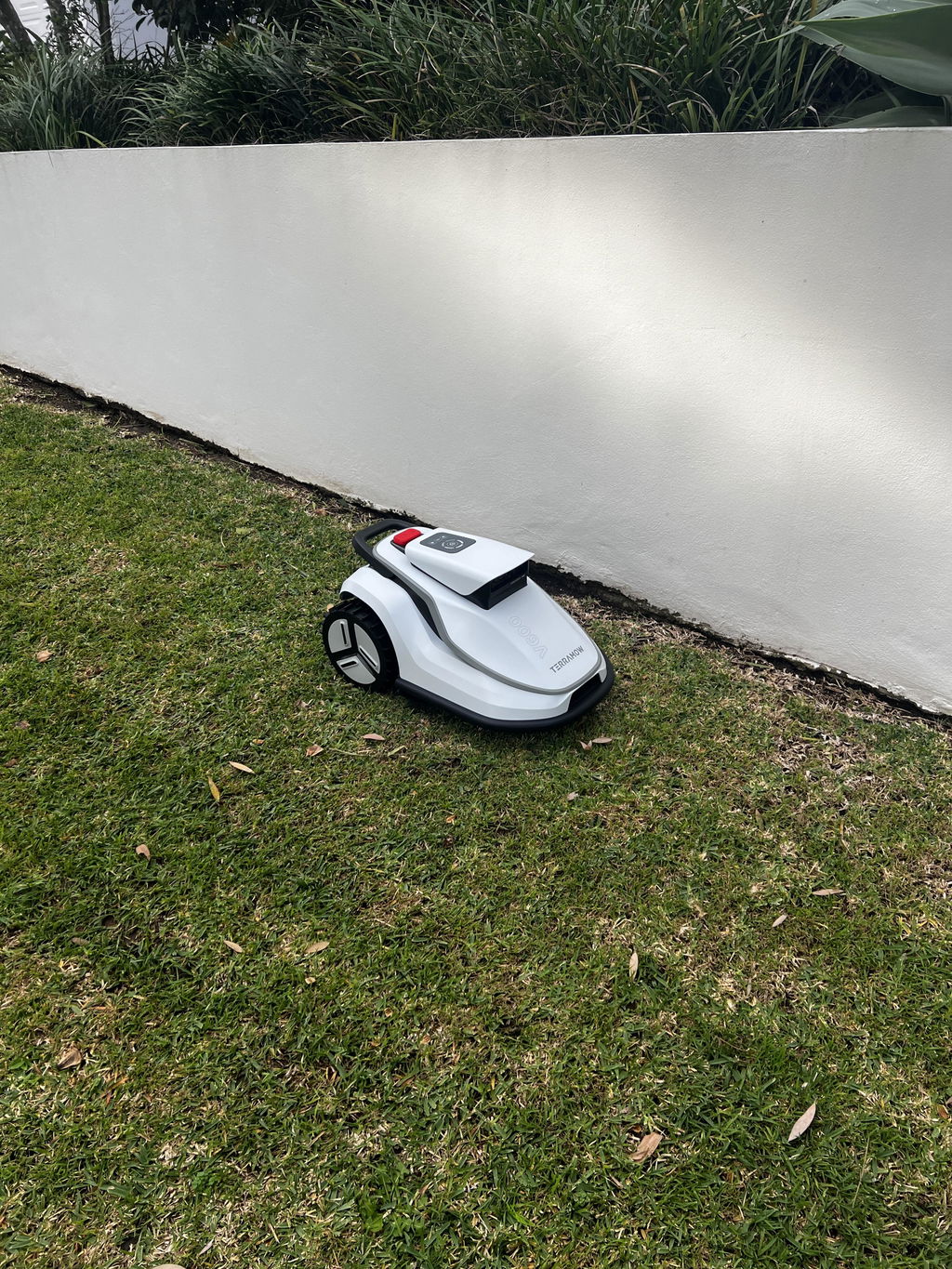
AI vision robotic mowers don't just "see". They recognise. The ADVINSYS AI Vision Mower, for example, is equipped with a three-camera system and advanced AI algorithms that deliver a wider field of view and fewer blind spots. That means it can accurately identify living beings and react in milliseconds. When your cat strolls across the lawn mid-mow, the mower spots it, slows down, and steers around it before you even have time to worry. No bumping, no contact, no panic.
Gentle Blade System
ADVINSYS AI Vision Mowers use advanced obstacle avoidance for pets. Lightweight pivoting blades that retract instantly on contact with any solid object, combined with camera-based detection that steers clear of animals before contact even happens. Even in the unlikely event of a close encounter, the blade yields rather than cutting through. Combined with the lift-and-tilt sensor that stops the blade the moment the mower is picked up, it's designed with pet safety as a core feature, not an afterthought.
Wire-Free Design
Traditional robotic mowers require a boundary wire buried or stapled around your lawn's edge. To a dog or puppy, that wire is an invitation to dig. AI vision mowers eliminate boundary wires entirely, as navigation is handled by cameras and AI, so there's nothing for your pet to chew on, trip over, or dig up.
Quiet Operation
A quiet mower means your pets can keep doing what they do, like snoozing, playing, patrolling, without a second thought. AI vision lawn mowers typically operate at 55-65dB, while ADVINSYS robotic mowers run under 54 dB, quieter than normal conversation. No engine roar, no vibration through the ground, no stress triggers. Dogs that typically hide during traditional mowing sessions tend to ignore robotic mowers entirely. Are robotic mowers safe for dogs when it comes to noise? Absolutely. The sound level is low enough that even anxious dogs tend to relax.
Scheduled Mowing
When you set the schedule, the mower sticks to it. Same days, same times, every week. That consistency is good for pets. Dogs and cats are creatures of habit. They learn quickly that the mower comes out at certain times and goes back to its station on its own. After the first few runs, most pets treat it like any other part of the household routine. No fuss, no fear. No more rounding everyone up and shutting them inside every time you need to mow.
Robotic Mowers vs Petrol Mowers: Pet Safety Comparison
Below we've stacked robotic mowers up against the petrol mower sitting in most Australian sheds. Same yard, different approaches. See what actually keeps your pets safer.

When you look at the robotic mower vs petrol mower pet safety comparison, the AI vision mower wins across the board. The next-generation AI vision technology removes many of the everyday risks including no exposed high-speed blades in uncontrolled operation, significantly lower noise, zero emissions, and no boundary wire to install or maintain. Instead of reacting to obstacles after contact, it is designed to detect and respond in real time.
How to Keep Pets Safe While Mowing the Lawn
Knowing how to keep pets safe while mowing the lawn isn't just about buying the right machine. It's also about how you introduce it. Even the quietest, safest mower is still a new thing in your pet's territory. Here's how to make the transition smooth:
Take It Slow
Don't just set the mower loose on day one. Let your pet sniff it while it's turned off. Most dogs and cats will investigate, decide it's boring, and move on. That first encounter, while the machine is harmless and stationary, sets the tone.
Start with Short Sessions
Run the mower for 10–15 minutes at a time during the first week. Stay nearby and observe your pet's reaction. Most animals adjust within a few sessions, but some nervous pets may need a bit longer. Reward calm behaviour with treats, and positive reinforcement goes a long way.
Set Pet-Free Zones
The ADVINSYS AI Vision Mowers let you define no-go zones through the app. Use them to keep the mower away from your dog's favourite digging spot, the cat's sleeping area under the tree, or any space you'd rather leave untouched.
Keep an Eye on Puppies and Kittens
Young animals are naturally more curious and less cautious. Until they've learned to ignore the mower, supervise their time in the yard while it's running. Most puppies figure it out within a week. And if you're wondering are robotic mowers safe for cats, the answer is yes. The same gentle blade system and obstacle detection applies. Cats, being more skittish by nature, often take even less time to adjust because they simply avoid the mower on their own.
Choosing the Best Pet-Friendly Robotic Lawn Mower in Australia
If you're after the best pet-friendly robotic lawn mower in Australia, here's what to prioritise:
-
AI vision navigation: this is non-negotiable for pet safety. Camera-based detection means the mower actively sees and avoids your animals, unlike bump-sensor models that have to make contact first. The ADVINSYS AI Vision Mowers are purpose-built for this.
-
Pivoting blade system: blades that retract on impact are a must. Fixed blades, even on a robotic mower, are a risk.
-
No boundary wire: eliminates a chew hazard and means less for your pet to interact with. AI vision navigation handles everything wire-free.
-
Low noise output: anything under 70 dB is safe for pets. The quieter the better, especially for anxious animals.
-
App-based scheduling and zone control: being able to set no-go areas and schedule around your pet's routine makes the whole experience stress-free.
Conclusion
If you've got pets and a lawn, you shouldn't have to choose between them. Petrol mowers are loud, dirty, and genuinely risky for animals. Blade injuries, noise trauma, exhaust exposure, and fuel hazards are all real concerns that most pet owners simply put up with when they didn't have a better option.
Now they do. AI vision robotic mowers combine quiet electric operation with intelligent pet detection, wire-free navigation, and gentle blade systems that make them the safest mowing option available for Australian families with pets.
Looking for a mower that works around your pets? Explore more about ADVINSYS, the wire-free, pet-friendly robotic mowers designed with Australian families in mind. No boundary wires, no petrol, no stress for your furry mates.