Robotic Mower vs Traditional Mower: Which Is Better for Australian Lawns?

Lawns are an essential part of almost every family’s outdoor life. Whether it’s weekend barbecues, children playing in the yard, or simply enjoying the sunshine, a well-maintained lawn is definitely indispensable.
Maintaining a neat and healthy lawn takes effort, but choosing the right tool can make it much easier. For decades, traditional lawn mowers have been the go-to choice for most homeowners. However, they require time, physical effort, and regular maintenance. In contrast, robotic lawn mowers offer a smarter approach, automatically mowing on a preset schedule with minimal manual operation.
In this guide, we'll compare both options across key factors, including efficiency, lawn health, noise level, cost, and user experience, to help you make a more informed choice.
Overview: How Do Robotic and Traditional Mowers Work?
Before choosing a mower, it helps to understand how each type actually works. These two approaches follow fundamentally different philosophies, and that difference affects everything from your weekend schedule to your lawn's long-term health.
Traditional Lawn Mowers
Traditional lawn mowers, including petrol-powered mowers, electric mowers, and battery-powered mowers, all require manual operation. You push or ride the mower across the lawn, cutting the grass in a single pass using fast-rotating blades set at a fixed height.
Most Australian homeowners mow every one to two weeks, depending on grass growth speed and seasonal conditions. While traditional mowers deliver immediate, visible results, they demand significant time and physical effort. You'll also need to manage fuel, charging, or power cords, and perform regular maintenance such as blade sharpening, oil changes, spark plug replacements, and seasonal servicing.
The biggest drawback? This approach depends entirely on your schedule. Miss a mowing session or two, especially during peak growing season, and your lawn quickly becomes overgrown and uneven.

Robotic Lawn Mowers
Robotic lawn mowers operate on a completely different principle. Instead of cutting a lot of grass in one session, they maintain your lawn through frequent, light trimming on an automatic schedule.
Once set up, they work autonomously within a defined area, mowing in small sections multiple times per week to keep grass at a consistently even height. They return to their charging station automatically when needed, and advanced sensors help them navigate efficiently while avoiding obstacles — all at a fraction of the noise level of a petrol mower.
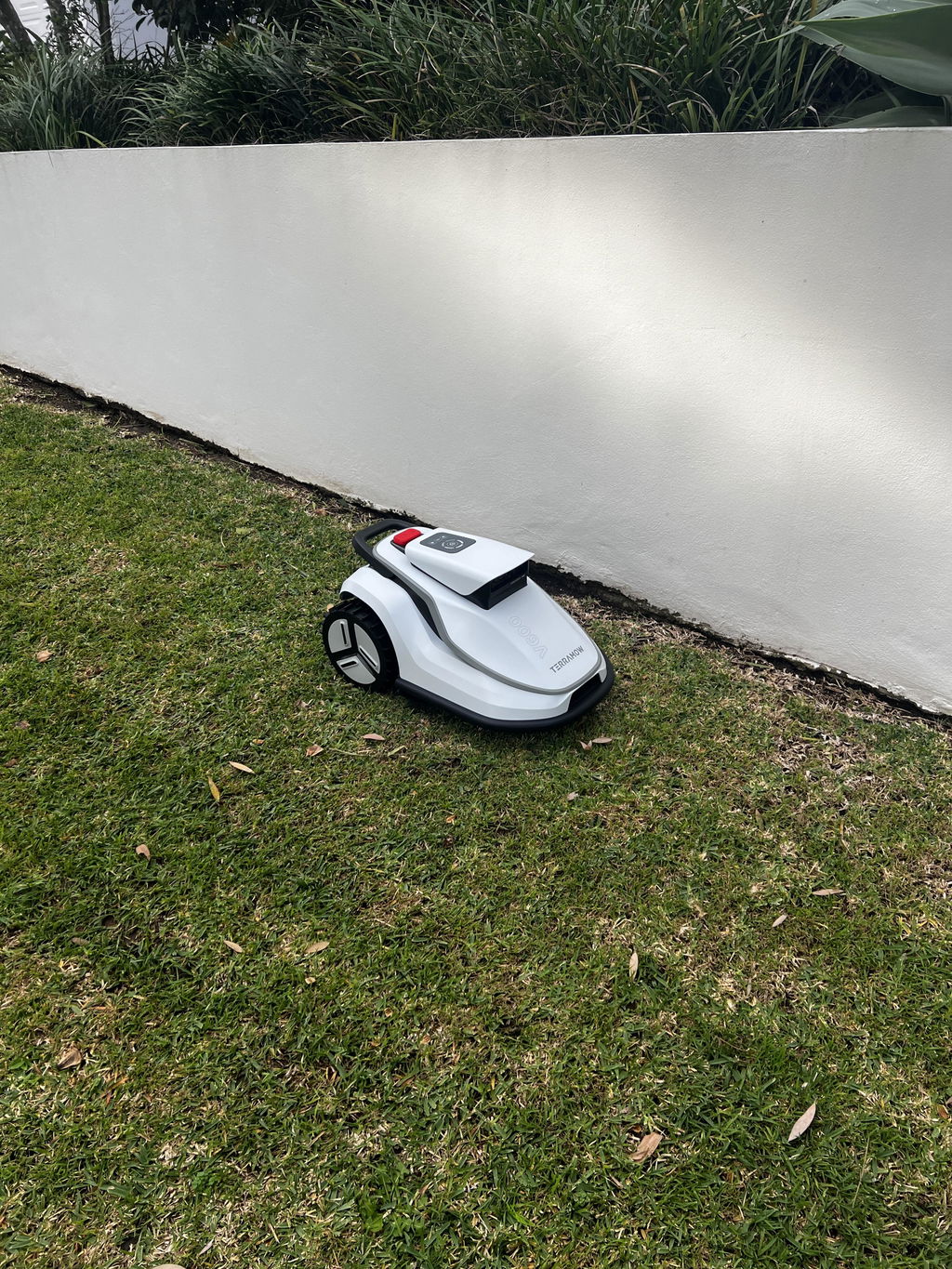
Modern robotic mowers, such as those from ADVINSYS, are specifically engineered to handle complex Australian lawns. They adapt to uneven terrain, navigate tight corners, and adjust to flexible mowing schedules, making them increasingly popular with Australian homeowners looking for a hands-free lawn care solution.

Traditional Mowers VS Robotic Mowers: A Full Comparison
Choosing between a traditional mower and a robotic mower is about more than just cutting grass. It’s about how you value your time, cost, convenience, and long-term lawn health.
Below is a detailed comparison of the two options across the most important factors to help you understand which one better fits your lifestyle.
Mowing Efficiency & Consistency
Robotic mowers operate fully automatically after setup, requiring almost no manual operation. They perform light mowing several times per day or week, keeping the lawn at a consistently neat height regardless of your schedule. This means your lawn always looks freshly cut, not just on the weekend you get around to it.
Traditional mowers require manual operation every single time. A single session usually takes 1–3 hours, and mowing frequency depends entirely on the user's availability. If you're busy, travel frequently, or simply forget, the lawn suffers.
Conclusion: For homeowners who want a consistently neat lawn without the weekly chore, robotic mowers are the clear winner in efficiency. Traditional mowers suit users who enjoy hands-on yard work and don't mind the time commitment.
Upfront & Ongoing Costs
Actually, robotic mowers cost more upfront. Quality models range from around $900 to $5,000+ in Australia, while traditional mowers are generally $200 to $1,500.
But the cost story flips when you look at ongoing expenses:
-
Robotic mower running costs: ~$10–30/year for electricity + $50–150/year for maintenance (blade replacements, occasional cleaning). Over 5 years, total cost averages around $2,450.
-
Traditional petrol mower running costs: ~$50–150+/year for fuel + $100–300+/year for servicing (oil, spark plugs, air filters, blade sharpening). Over 5 years, total cost averages around $3,500.
Conclusion: Traditional mowers win on initial price. But over 3–5 years, robotic mowers become more cost-effective thanks to significantly lower running costs and minimal maintenance requirements. If you plan to stay in your home long-term, a robotic mower is the smarter financial choice.
Impact on Lawn Health
This is where robotic mowers really shine, especially on Australian grass varieties like Buffalo, Kikuyu, and Couch. Understanding the differences between these popular Australian grass types is important — each has its own mowing requirements, and all respond best to frequent, gentle cuts rather than infrequent aggressive mowing.
Robotic mowers follow the golden "one-third rule" automatically, never cutting more than one-third of the grass blade height at a time. This significantly reduces stress on the lawn and promotes denser, more even growth. Their lightweight design also means less soil compaction, which is particularly important for Australian clay-heavy soils that are prone to hardening.
Traditional mowers cut less frequently but more aggressively per session. When mowing is delayed, as it often is during busy periods, the result is overcutting, which stresses the grass and can leave it vulnerable to weeds, disease, and heat damage (a real problem during Australian summers). Heavier machines also contribute to soil compaction over time, restricting water and airflow to roots.
It is worth noting that buffalo grass (one of Australia's most popular varieties) responds especially well to frequent light mowing. A robotic mower can help maintain its signature thick, soft texture without the scalping that occasionally happens with traditional mowers.
Conclusion: For healthier, denser, greener lawns, particularly with popular Australian grass types, robotic mowers deliver measurably better results through consistent, gentle maintenance.
User Experience

Robotic mowers require an initial setup, but once completed, they run with minimal ongoing effort. They are true “set-and-forget” systems, automatically managing mowing schedules and charging.
Traditional mowers may appear simpler at first, but require manual operation every time. They also demand ongoing human involvement and continuous maintenance.
Conclusion: Robotic mowers offer a fundamentally improved user experience, effortless, fully automated, and quiet. On the other hand, however, traditional lawn mowers rely on manual labor, repeated effort, and high noise levels, making them less suited for modern, convenience-driven lifestyles. For users who value convenience, automation, and a quieter environment, robotic lawn mowers are the superior choice.
Lifespan & Durability
Robotic mowers typically last 5–10 years for the main unit. Key wear parts such as blades and batteries are modular and inexpensive to replace. Batteries usually last 2–5 years, and blades cost only a few dollars, replaced every few weeks. With proper maintenance, the system remains reliable throughout its lifespan.
Traditional petrol mowers can last 7–12 years, but longevity depends heavily on engine care. Spark plugs, air filters, fuel systems, and blades all require regular servicing, and engine wear over time leads to declining performance or costly repairs.
Conclusion: Traditional mowers may have a slightly longer potential lifespan, but robotic mowers offer more predictable performance with simpler, lower-effort maintenance. A well-maintained robotic mower will outlast a neglected petrol mower every time.
Maintenance Requirements
Robotic mowers are designed to be low-maintenance and largely hands-off. After setup, you only need to:
-
Occasionally clean grass clippings and debris
-
Replace blades every few weeks (inexpensive)
-
Perform basic system checks periodically
Traditional mowers require consistent, hands-on maintenance throughout the mowing season:
-
Refuelling and oil changes
-
Spark plug and air filter replacements
-
Blade sharpening (or replacement)
-
Seasonal servicing before storage
Conclusion: Robotic mowers save you time not just on mowing, but on maintenance too. If you'd rather spend your weekends enjoying your lawn than servicing your mower, the robotic option is the clear choice.
Sustainability & Environmental Impact
For environmentally conscious Australian homeowners, this is an important consideration.
Robotic mowers are electrically powered and produce zero direct emissions during operation. Their frequent light trimming promotes healthier growth, which can reduce the need for fertilisers and reseeding over time. They also consume very little electricity, typically less than $30 per year.
Traditional petrol mowers burn fossil fuels and produce significant carbon emissions and noise pollution. Research published by ScienceDirect on lawn mower emissions in Australia found that petrol-powered lawn mowers contribute substantially to urban hydrocarbon and carbon monoxide loadings. In fact, according to data cited by Sustainable Macleod, tests at the University of Newcastle found local mowers contributed 5.2% of carbon monoxide and 11.6% of non-methane hydrocarbons as a proportion of transport emissions in the region — despite their small size. The Australian Government's Department of Climate Change, Energy, the Environment and Water has established national emissions standards for outdoor power equipment including lawn mowers, reflecting the recognised environmental impact of these engines.
Conclusion: Robotic mowers offer a cleaner, more sustainable approach to lawn care. For households looking to reduce their carbon footprint, the switch from petrol to electric mowing makes a meaningful difference.
Safety
Robotic mowers are designed with advanced sensors and safety systems that detect obstacles, lifting, and tilting. When a potential risk is identified, blades stop automatically within milliseconds. This makes them significantly safer around children, pets, and family outdoor activities.
Traditional mowers rely entirely on manual control. Fast-spinning blades require constant attention, and the risk of cuts, flying debris injuries, or burns from hot engine parts is significantly higher.
Conclusion: Robotic mowers deliver superior safety through automation and intelligent sensing. For families with young children or pets, this is one of the most compelling reasons to make the switch.

What Makes Robotic Mowers Different?
Robotic mowers are designed to make lawn care effortless. Here's what sets them apart from traditional machines:
-
Fully Automated Operation: Once set up, they maintain your lawn on schedule with minimal human intervention.
-
Smart Navigation: Sensors, GPS, or AI vision keep them within defined areas and help them avoid obstacles.
-
Frequent Light Trimming: Instead of aggressive once-a-fortnight cutting, they trim small amounts regularly, following the one-third rule for healthier grass.
-
Whisper-Quiet Performance: Electric motors operate at conversation-level volume.
-
Eco-Friendly Design: Electric power means zero direct emissions and lower energy consumption.
-
Enhanced Safety: Built-in sensors detect lifting, tilting, and obstacles, stopping blades automatically.
These features make robotic mowers ideal for homeowners seeking low-maintenance, environmentally friendly lawn care. However, they may not suit every yard. Large properties (2000㎡+) or extremely steep slopes may still require a ride-on or heavy-duty traditional mower.
How to Choose the Right Mower for Your Yard
When deciding between a robotic mower and a traditional mower, there are several key factors to consider:
-
Lawn Size: Small to medium-sized lawns are well-suited for robotic mowers, whereas larger properties are typically better served by petrol-powered or ride-on models.
-
Terrain Type: Flat lawns are suitable for most standard mowers. Sloped, uneven, or complex landscapes require mowers with strong traction and smart navigation systems.
-
Noise Level: Robotic mowers operate more quietly than petrol-powered models. This makes them better suited for residential areas and frequent use.
-
Budget: Take into account both upfront and ongoing costs to ensure you choose a solution that is cost-effective and sustainable over time.
-
Time Savings: Those seeking high-efficiency mowing can consider robotic mowers, while those who prefer to spend more time enjoying a hands-on mowing experience can opt for traditional lawn mowers.
-
Environmental Impact: For those who value sustainability, robotic mowers are a great option.
Introducing the ADVINSYS Terramow V Series: Next-Gen AI Robotic Mowers
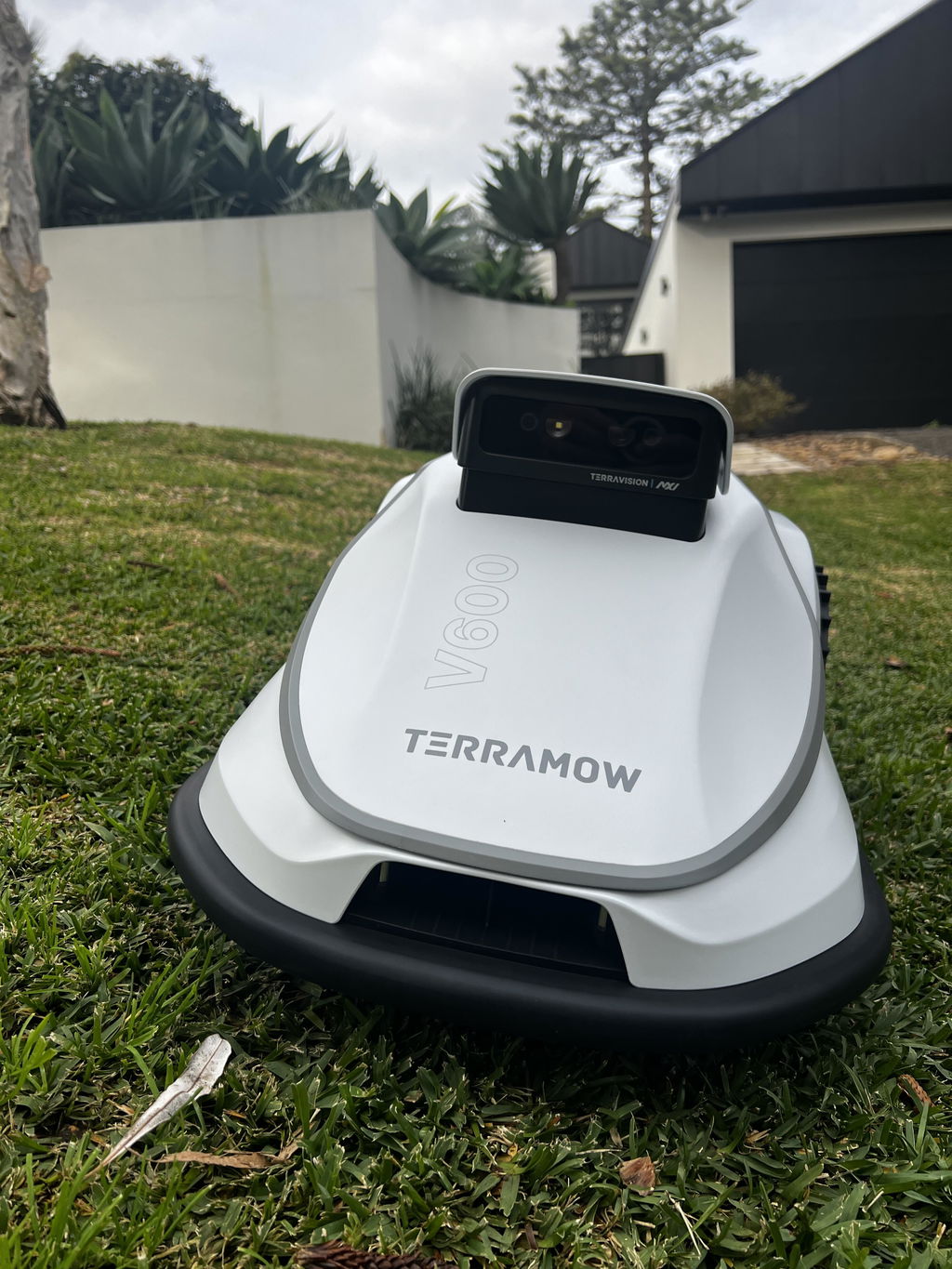
Robotic mowing technology has evolved rapidly, and the ADVINSYS Terramow V Series represents the cutting edge. Powered by advanced AI vision, it delivers truly autonomous lawn care with precision, safety, and ease. Designed for modern Australian outdoor living, it transforms lawn maintenance into a seamless, worry-free experience.
What Sets the Terramow V Series Apart:
-
3D AI Vision Navigation: No boundary wires. No RTK signal dependence. No signal dead zones. The Terramow V creates and continuously updates detailed 3D maps of your lawn using AI vision alone. Setup takes just 5 minutes. Simply place it on your lawn and let it map automatically.
-
Triple-Camera Obstacle Avoidance: Three advanced AI cameras with a larger CMOS sensor deliver sharper imaging and highly accurate object detection. The system reliably identifies pets, children's toys, garden furniture, and other obstacles, ensuring safe operation at all times.
-
3 Mowing Modes: Choose from Standard Mode (regular scheduled mowing), Multi-Base Mode (for larger or multi-zone properties), and Spot Mode (immediate mowing with no base station or mapping required, perfect for quick touch-ups).
-
All-in-One App Control: Take full control from anywhere. Customise schedules, manage multiple zones, set no-go areas, and fine-tune cutting height and speed through the ADVINSYS mobile app.
-
Sustainable & Whisper-Quiet: Fully electric with zero direct emissions. Operating at under 54 dB, it works quietly enough to run while you relax, work, or entertain in your garden.
-
Customisable Edge Cutting: Achieve a cleaner finish with up to three rounds of edge cutting. Divide lawn edges into segments and customise cutting style, height, and speed down to the finest detail.
The Future of Australian Lawn Care Is Here
The shift from petrol to intelligent robotic mowing isn’t just evolution — it’s transformation. Lower costs, healthier lawns, zero emissions, and whisper-quiet operation redefine what lawn care should feel like.
Powered by next-generation AI vision, ADVINSYS robotic mowers bring precision, intelligence, and ease to every cut. Make the switch today and take control of your lawn the smarter way.